Butterfly Envelope: A Designer’s Practical Review
When evaluating a new digital asset for my studio, I always look beyond the thumbnail. As a designer who creates both physical embroidered goods and digital cut files, I approach the Butterfly Envelope with a critical eye toward versatility. While this product is listed as a 3D SVG intended for laser cutting or vinyl applications like Cricut and Silhouette, my primary interest lies in its potential as a foundational shape for mixed-media projects. In the world of handmade products, the line between digital cutting and machine embroidery often blurs, and understanding how this specific envelope template translates across mediums is vital for any serious maker or Etsy seller.
First Impressions and Design Anatomy
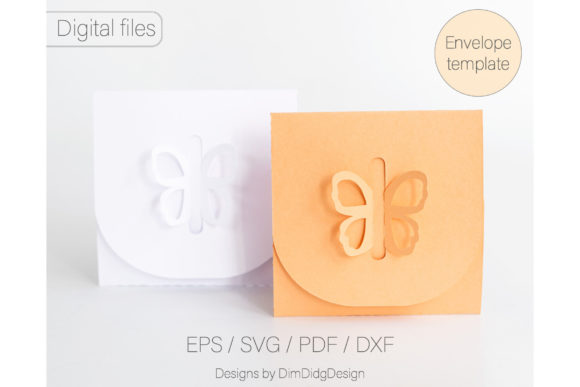
My initial assessment of the Butterfly Envelope focuses on line quality and structural integrity. For a gift card holder or cash envelope template to function correctly, the geometry must be precise. Visually, the butterfly motif integrated into the envelope flap offers a soft, organic contrast to the rigid functional lines of the box itself. This balance is crucial. Too much detail can make a laser-cut edge charred or messy; too little makes it look generic. This design strikes a professional middle ground.
From an embroidery digitizer's perspective, this clean vector aesthetic is a dream starting point. If I were to adapt this for a machine embroidery design, the distinct separation between the envelope body and the decorative butterfly element allows for flexible stitch planning. The layout suggests natural break points where one could utilize a satin stitch for the butterfly outline and a lighter fill stitch or running stitch for the envelope folds. It does not feel cluttered, which is a common pitfall in complex gift box designs. The visual personality is undeniably feminine and celebratory, making it immediately suitable for wedding favors, baby showers, or boutique packaging.
Real-World Application: The Custom Tote Bag Scenario
To truly test the viability of this concept, I recently considered it for a custom apparel and accessory project. A client requested a series of personalized gift tote bags for a bridal party, specifically asking for a "gift within a gift" presentation. Instead of merely stitching a flat butterfly, I used the Butterfly Envelope silhouette as the central applique design on a canvas tote bag.
In this real-life scenario, the 3D SVG file served as the perfect template for creating a fabric appliqué piece using my cutting machine, which was then hooped and stitched onto the tote. The result was a textured, dimensional pocket that actually functioned as a holder for the bridesmaid's gift card. This hybrid approach elevated the perceived value of the finished product significantly. Customers often react positively to tactile elements; a flat embroidery print is nice, but a functional, stitched envelope pocket creates an experience. For small shop owners, this type of multi-functional design justifies a higher price point because it serves as both decoration and utility.
Navigating Fabric Limitations and Hoop Constraints
However, translating a rigid paper or wood template design into thread requires caution. Not every surface welcomes the Butterfly Envelope equally. Through testing, I have identified specific scenarios where careful adjustment is necessary:
- Stretchy Fabrics: When applying this design to sweatshirts or stretchy knits, the geometric straight lines of the envelope can distort. You must use a high-quality stabilizer and potentially a topping to prevent the fabric from puckering inside the box shape.
- Textured Surfaces: On fabrics like terry cloth towels or fleece blankets, the delicate inner details of the butterfly may get lost. In these cases, simplifying the design to bold outlines or increasing stitch density is mandatory for clarity.
- Small Hoop Sizes: If you are working with a 4x4 hoop size, resizing this template requires scrutiny. Reducing the overall footprint often means the butterfly wings become too dense or the envelope flap loses definition. Always test on scrap fabric before committing to a final garment.
- Dark Fabrics: Contrast is king. A dark navy sweatshirt demands light thread colors or a white felt backing for the appliqué to ensure the Butterfly Envelope reads clearly from a distance.
Commercial Viability for Makers and Sellers
For Etsy sellers and creative entrepreneurs, time is money. The Butterfly Envelope excels because it bridges multiple product categories without requiring new assets. As a digital product seller, you can offer the raw SVG for crafters who own laser cutters. Simultaneously, as an apparel decorator, you can use that same file to create exclusive embroidered patches or custom apparel that no one else has, simply by interpreting the vector lines as stitch paths.
This versatility directly impacts buyer engagement. When listing a handmade product, showing the envelope in use—perhaps holding a real gift card in a product photo—builds customer trust far better than a digital mockup alone. It demonstrates professionalism and attention to detail. Furthermore, for those selling printable mockups or design assets, this template provides a recognizable, trendy shape that resonates with current market aesthetics in the gift box and stationery niches.
Critical Technical Notes for Embroidery Adaptation
Before you load this design into your software or machine, please heed these practical designer notes. Since the source material is a cut file and not a pre-digitized embroidery file, verification is your responsibility:
- Verify Licensing: Confirm whether your purchase includes commercial rights for finished physical products versus digital redistribution. Never assume; check the specific license terms provided with the Butterfly Envelope.
- Stitch Density Check: Vectors do not have stitch density. If you are auto-digitizing this for embroidery, manually adjust the underlay and top stitch density. Auto-digitizers often over-saturate fill areas, leading to needle breaks or stiff fabric.
- Test on Scrap First: Always run a sew-out on the exact fabric and stabilizer combination you intend to use for the final project. Paper templates behave differently than woven cotton or polyester blends.
- Thread Color Planning: Test the design in black and white mockups first to establish value contrast before selecting thread colors. What looks good in colored vector format might look muddy if two thread shades have similar luminosity.
- Corner Radius Inspection: Cutting machines handle sharp corners differently than embroidery needles. Inspect the inner corners of the envelope design; you may need to add slight curves to prevent thread perforation or fabric tearing at stress points.
Elevating the Finished Product
Ultimately, the Butterfly Envelope is more than just a cute shape; it is a functional asset for the modern maker. Whether you are producing holiday embroidery for seasonal sales, creating personalized gift packaging for weddings, or expanding your digital catalog, this design offers a solid foundation. Its success lies in your ability to adapt it thoughtfully to your specific medium. By respecting the technical requirements of both cutting and stitching, and by applying it in contexts where its whimsical yet structured nature shines, you transform a simple SVG into a signature element of your brand. Remember, in our industry, the difference between a hobbyist and a professional is often found in these deliberate, tested adaptations.