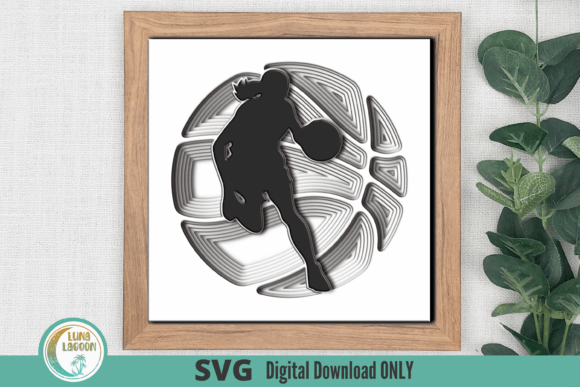
3D Basketball Player Female SVG Review
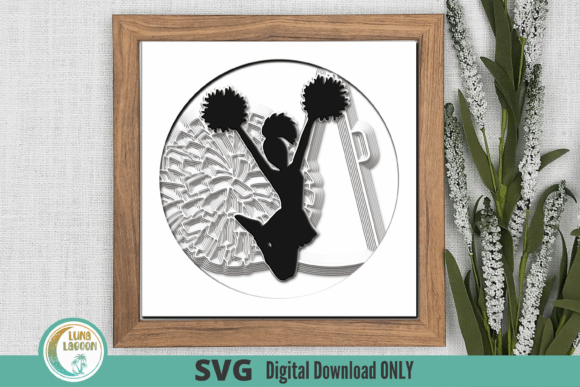
As a designer who constantly bridges the gap between digital files and tangible, stitched goods, I approach every new asset with a healthy dose of skepticism. When I first opened the 3D BASKETBALL PLAYER Female Svg, my immediate thought was not about how it would look on a screen, but how it would translate into a physical handmade product. The description highlights this as a layered file perfect for Shadow Boxes, featuring ten intricate layers that create depth through a female player silhouette and basketball elements. While my primary focus is often machine embroidery design, understanding the structural integrity of these 3D SVG files is crucial for makers who want to adapt them for mixed-media projects or use them as precise guides for custom apparel and decor.
First Impressions: Depth, Silhouette, and Structural Integrity
The visual personality of this design is undeniably dynamic. Unlike flat vector art, the ten-layer construction suggests a sense of motion and dimensionality that is rare in standard digital assets. For an Etsy seller or craft business owner, this complexity is a double-edged sword. On one hand, it offers a premium look that justifies a higher price point for finished shadow boxes. On the other hand, those ten layers demand precision. As I evaluated the file, I looked specifically at how the silhouette interacts with the basketball elements. In a real-life scenario, such as creating a personalized gift for a high school athlete or a boutique sports memorabilia piece, the separation between layers must be distinct enough to prevent visual muddiness when assembled.
For embroidery professionals looking to adapt this concept, the strong silhouette serves as an excellent foundation. If you were to digitize this for a sweatshirt embroidery project, the bold shapes would allow for clean fill stitch areas without excessive detail getting lost in the fabric texture. However, because this is natively a 3D SVG intended for paper or wood layering, anyone attempting to convert it into an embroidery file must be prepared to simplify. Ten layers of paper create depth through shadow; ten layers of thread create bulk and potential puckering. Recognizing this distinction is what separates a professional result from a failed embroidery project.
Real-World Application: From Digital Layers to Stitched Reality
I recently consulted on a project involving custom team gifts where we considered adapting similar multi-layered designs. The goal was to create a hybrid product: a framed shadow box that incorporated embroidered elements. Here is where the 3D BASKETBALL PLAYER Female Svg truly shines as a versatile asset. For small shop product lines, using this SVG as the base for laser-cut layers while adding a central embroidered patch creates a unique value proposition. It elevates the item beyond a simple print or a basic stitch-out.
However, if your intent is purely textile-based, caution is required. I have seen makers attempt to replicate complex 3D layering directly onto stretchy fabrics like jersey knits or lightweight cotton tees. This is often problematic. The density required to mimic ten layers of visual depth can distort fabric texture and cause hooping issues. A more successful application I have reviewed involved using the outer silhouette as an applique design on a tote bag design. By reducing the ten layers to three distinct fabric zones—background, player, and ball—the design retained its spirit without compromising the structural integrity of the bag. This adaptation makes it suitable for commercial embroidery where washability and durability are non-negotiable for customer trust.
Navigating Fabric Limitations and Hoop Constraints
When evaluating this design for real production, you must consider where it should not be used. The intricacy implied by "ten layers" means small details are likely present. If you are working with a small hoop size, such as a 4x4 inch field, critical elements of the female player’s form may become indistinguishable. I always advise testing on scrap fabric first, especially if you are modifying the original SVG for stitch. Tiny lettering or fine limb details that look crisp in a vector program can turn into thread nests on textured fabrics like terry cloth or fleece.
Furthermore, consider the stabilizer requirements. A design with this much visual weight needs robust support. Using a tear-away stabilizer on a heavy sweatshirt might seem sufficient, but if you are adapting the full complexity of this 3D SVG, a cut-away stabilizer is often necessary to prevent the design from pulling the garment out of shape over time. For baby embroidery or items meant for sensitive skin, the backside of the stitching becomes a safety concern. The density needed to achieve a 3D effect with thread can create a stiff, scratchy backing. In these cases, I recommend using the SVG strictly for the shadow box component and choosing a simpler, low-stitch-count variation for any accompanying textile items.
Enhancing Product Value and Buyer Engagement
From a business perspective, the 3D BASKETBALL PLAYER Female Svg addresses a specific niche: female athletes. This representation is still underserved in many generic design marketplaces. Utilizing this specific imagery can significantly boost engagement for sellers targeting women’s sports teams, moms of ballerinas, or female coaches. When listing a finished product derived from this file, your photography should emphasize the depth. Flat photos fail to communicate the value of a 3D layered design. Use angled lighting to cast shadows between the layers, proving to the buyer that this is a premium, dimensional piece rather than a flat sticker.
For those selling the digital assets themselves or using them in printable mockup presentations, ensure you are showcasing the assembly process. Buyers need to understand that this is a multi-part file. Transparency builds trust. Clearly state whether the file includes registration marks or alignment guides, as this affects the usability for crafters using different cutting machines. If you are an Etsy seller offering this as part of a bundle, pair it with complementary fonts or simpler accent graphics to increase the perceived value of your design assets.
Essential Designer Notes for Professional Results
Before you commit this design to a production run or list it in your shop, adhere to these practical checkpoints:
- Verify Licensing: Always confirm whether your purchase includes commercial rights for selling finished shadow boxes or if it is limited to personal use. This is critical for craft business compliance.
- Test Layer Alignment: With ten layers, tolerance is tight. Cut a test set on cardstock before using expensive basswood or acrylic. Ensure your machine’s blade depth and pressure are calibrated to avoid ragged edges that ruin the 3D illusion.
- Contrast Check: Evaluate the design in both light and dark modes. Some layered SVGs rely on white spacing that disappears on white paper or fabric. Ensure the female player silhouette reads clearly against your chosen background material.
- Digitizing Caution: If converting to an embroidery file, do not auto-digitize all ten layers. Manually select key elements to preserve the artistic intent without creating a bulletproof vest on the fabric. Check stitch density settings specifically for the satin stitch borders.
- Mockup Accuracy: When creating digital previews, render the shadow depth accurately. Misleading mockups that show 3D effects on flat prints lead to returns and negative reviews. Honesty in presentation protects your brand reputation.
Ultimately, the 3D BASKETBALL PLAYER Female Svg is a powerful tool for creators willing to respect its complexity. Whether you are building intricate shadow boxes or adapting its bold energy for custom apparel, success lies in understanding the translation from screen to substrate. Treat the ten layers as a guide for visual hierarchy rather than a rigid mandate, and you will create products that resonate deeply with your audience.