Sweet Couple: A Designer’s Review for 3D Shadow Boxes
When evaluating a new digital asset for my studio, I look beyond the preview image and focus on how the design translates into a tangible, sellable product. As a designer who regularly creates shadow boxes and layered paper art for clients, I approached the Sweet Couple file with a critical eye toward structural integrity and emotional resonance. This is not merely a flat graphic; it is marketed as a 3D SVG intended for shadow box applications, which changes how we must assess its utility compared to a standard machine embroidery design or vinyl decal.
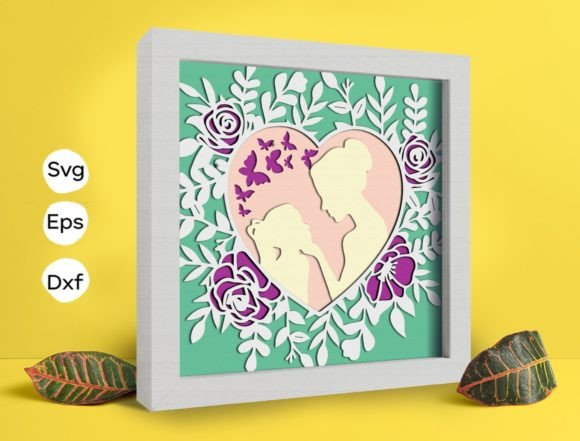
The first impression of Sweet Couple is one of balanced intimacy. The composition at the original 20x20cm size suggests a centerpiece rather than a background filler. For those of us running an Etsy shop or a local craft business, this scale is significant. It fits perfectly within standard 8x8 inch shadow box frames without requiring excessive resizing that might distort delicate lines. The mood strikes a versatile note—it feels appropriate for wedding gifts, anniversary keepsakes, or even nursery decor, depending entirely on your material choices. However, because this is a 3D SVG, the success of the finished product relies heavily on understanding layer separation and depth, not just color matching.
Real-World Application: Building a Layered Anniversary Gift
To truly test the viability of Sweet Couple, I mentally walked through creating a custom anniversary shadow box for a client. In this scenario, the design serves as the focal point against a contrasting cardstock background. Unlike a sweatshirt embroidery project where stitch density dictates durability, here we are concerned with cut precision and assembly logic.
In a real production environment, I would utilize the provided SVG and DXF files for cutting machines like Cricut or Silhouette. The PNG and EPS files serve a different but equally vital purpose: creating high-quality printable mockups for my shop listings. Before committing expensive glitter cardstock or specialty vellum to the blade, I need to know if the couple’s silhouette holds up when separated into distinct layers. Does the design rely on internal bridges that might tear during weeding? Is the negative space sufficient to create actual shadow depth, or will the layers collapse visually when stacked?
For small business owners, this specific use case highlights the value of multi-format inclusion. While I am building the physical shadow box using the vector files, I can simultaneously use the high-resolution PNG to create social media content or digital product previews. This dual utility streamlines the workflow for makers who need to market their work as efficiently as they produce it.
Navigating Material Limitations and Sizing Constraints
While the product description notes that images can be resized as long as the ratio is retained, practical experience dictates caution. Sweet Couple originates at 20x20cm, which is an ideal baseline. Scaling down significantly below 10cm for mini shadow boxes requires scrutiny. Intricate details in the couple’s attire or facial features may become too fragile for cardstock cutting. If you plan to adapt this for smaller items like greeting cards or cake toppers, you must simplify the file manually to prevent breakage during assembly.
Conversely, scaling up for large wall art introduces different challenges. At larger sizes, the structural support of the paper becomes paramount. You cannot simply enlarge a 3D SVG and expect it to behave identically to the original. Heavier weight cardstock or foam core backing becomes necessary to prevent sagging within the frame. This is distinct from commercial embroidery projects where stabilizer handles the heavy lifting; in paper crafting, the material itself is the stabilizer.
Fabric texture also plays a role if you choose to incorporate textiles into your shadow box. If you decide to back the Sweet Couple design with linen or burlap for a rustic aesthetic, ensure the contrast is high enough. Detailed silhouettes can disappear against busy fabric textures. Always test your material combination under the specific lighting conditions of your display area, as shadows change dramatically between natural daylight and warm LED frame lights.
Impact on Perceived Value and Customer Trust
For handmade shop owners and creative entrepreneurs, the professionalism of your cut lines directly correlates to perceived value. A jagged edge or misaligned layer in a shadow box screams "amateur," regardless of how beautiful the source file is. Sweet Couple appears designed with clean vectors, which aids in achieving crisp results, but the maker’s execution is the final variable.
When listing a finished personalized gift derived from this design, customers are buying the precision of the assembly. Using the EPS or SVG files ensures that your cuts are mathematically perfect, fostering trust in your brand consistency. Furthermore, offering this design across multiple mediums—perhaps as a shadow box for some clients and utilizing the PNG for printable wall art for others—maximizes the return on your design assets. Just remember to verify licensing terms before selling digital derivatives versus physical handmade products.
Essential Pre-Production Checklist for Makers
Before launching Sweet Couple as a staple in your inventory or using it for a high-stakes client commission, run through these practical verification steps. These notes stem from years of troubleshooting both digital and physical production issues:
- Verify Layer Logic: Open the SVG in your cutting software and ungroup elements to confirm they are separated correctly for 3D stacking. Some files require manual adjustment to create true depth.
- Test Cut on Scrap: Never use premium materials for the first run. Test the smallest details on scrap paper to ensure your blade depth and pressure settings capture fine lines without tearing.
- Check Contrast Ratios: View the PNG file in black and white. If the design loses clarity without color, it may struggle when cut from monochromatic cardstock layers. Adjust spacing if necessary.
- Mockup Lighting Test: Assemble a rough prototype and photograph it inside your intended frame with your planned lighting. Shadows define this medium; if the light source flattens the design, adjust the spacer thickness.
- Confirm File Integrity: Ensure the DXF imports cleanly if you are using older cutting machine software. Sometimes nodes shift during format conversion, requiring cleanup before cutting.
- Licensing Compliance: Re-read the specific license included with your download. Confirm whether you can sell the physical shadow box, the digital file, or both. Protecting your business means respecting intellectual property boundaries.
- Material Weight Matching: Match paper weight to design complexity. Delicate lace-like details in Sweet Couple require lighter stock to cut cleanly, while base layers need heavy cardstock for rigidity.
Final Thoughts on Design Versatility
Sweet Couple offers a strong foundation for shadow box creators, provided it is treated as a structural blueprint rather than just a pretty picture. Its inclusion of SVG, PNG, DXF, and EPS formats demonstrates an understanding of modern maker workflows, bridging the gap between physical crafting and digital marketing. Whether you are an Etsy seller looking for a reliable wedding season bestseller or a hobbyist creating a meaningful anniversary gift, success lies in respecting the technical constraints of the medium.
Remember that while this asset is categorized alongside embroidery-friendly terms due to its aesthetic appeal, its primary function here is dimensional paper art. Approach it with the patience of a sculptor rather than the speed of a printer. By validating your materials, testing your cuts, and presenting the finished product with professional photography using the included PNG assets, you transform a simple digital file into a high-value handmade treasure. Always prioritize the tangible quality of the final assembly, as that is what ultimately secures customer satisfaction and repeat business in the competitive world of personalized gifts.