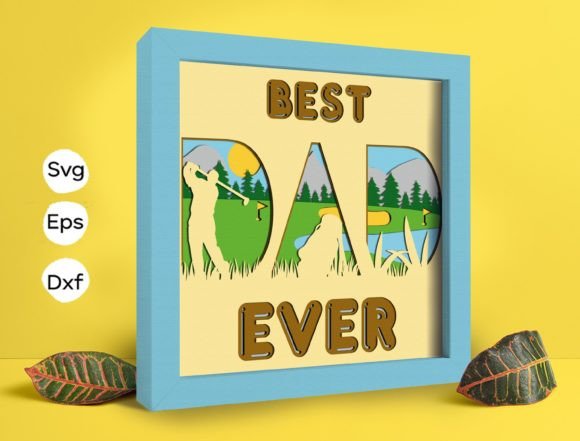
Best Golf Dad Ever Papercut Light Box Review
As a designer who constantly bridges the gap between digital cutting files and needle-and-thread execution, I approach every new asset with a specific question: will this actually translate to fabric? When I first opened the Best Golf Dad Ever Papercut Light Box files, my immediate thought was about layering. While this product is categorized under Shadow Boxes and provided as a 3D SVG for paper crafting, the intricate line work and distinct separation of elements make it a fascinating candidate for adaptation into a machine embroidery design. For Etsy sellers and craft business owners looking to expand their Father’s Day or golf-themed inventory, understanding how to repurpose this vector art for textile use is key to creating a unique handmade product.
Translating Vector Layers to Stitch Types
The visual personality of the Best Golf Dad Ever Papercut Light Box is defined by its depth. In its intended paper form, that depth comes from physical spacing. In embroidery, we have to manufacture that depth through stitch density and thread colors. Reviewing the EPS and DXF files in Adobe Illustrator, I noticed the clean, bold lines typical of laser-cut designs. This is excellent news for digitizers. Unlike raster images that require tedious tracing, these vectors provide precise paths for creating an applique design or complex fill stitch areas.
For a recent client project involving custom apparel for a golf tournament, I needed a design that felt premium but wasn't overly dense. I used the silhouette elements from this file to create a layered effect on a navy sweatshirt. The outer border worked perfectly as a satin stitch frame, while the internal golf motifs were converted to running stitch details. Because the original 3D SVG relies on high contrast for shadow effects, it naturally guides you toward high-contrast thread choices. A white or metallic gold thread against dark fabric mimics the light box effect beautifully, ensuring the design pops without needing excessive stitch counts that could distort the garment.
Real-World Application: The Custom Tote Bag Test
To truly evaluate this asset for commercial embroidery projects, I tested it on a canvas tote bag design. Totes are a staple small shop product, but they present challenges due to fabric texture and weight. I wanted to see if the "Best Golf Dad Ever" sentiment remained legible and charming when stitched rather than cut.
I adapted the central typography element into a combination of fill stitch and outline. The result was striking. The geometric precision of the papercut style gave the embroidery a modern, architectural feel that differs significantly from traditional cursive golf fonts. For personalized gift markets, this distinction matters. Customers browsing Etsy listings often scroll past generic designs. A finished product derived from this specific aesthetic signals intentionality and professional design assets usage. However, I did have to thicken the finest connecting tabs from the original SVG. What works as a structural bridge in cardstock can become a thread break or a lost detail in embroidery. Always reinforce these connection points before sending the digital embroidery file to your machine.
Fabric Limitations and Stabilizer Strategy
While the Best Golf Dad Ever Papercut Light Box adapts well to stable woven fabrics, caution is required for other applications. During my review process, I considered where this design might fail. Stretchy fabrics like performance golf polos require significant stabilization. The design’s structured nature fights against the drape of knit fabric. If you plan to use this for baby embroidery or lightweight apparel, you must use a heavy-duty cutaway stabilizer to prevent puckering.
Furthermore, be mindful of hoop size constraints. The full composition is detailed. Shrinking it down to fit a 4x4 hoop for a pocket logo or cap will likely render the inner text illegible. The negative space that defines the papercut look disappears when scaled too small. For caps and curved surfaces, I recommend isolating specific elements—perhaps just the golf club icon or the word "Dad"—rather than forcing the entire shadow box layout. Detailed corners and tiny lettering are the first casualties of improper scaling. Always test on scrap fabric that matches your final project's weight and texture before committing to a production run.
Technical Considerations for Makers
Since this product includes SVG, DXF, and EPS formats, you have flexibility, but also responsibility. These are not native embroidery files (like PES or DST). You or your digitizer must convert them. Here are practical notes for ensuring success:
- Verify Licensing: Before selling any finished product or embroidered patch based on this design, confirm the commercial license terms. Just because you bought the 3D SVG does not automatically grant rights to sell digitized embroidery versions.
- Check Stitch Density: Papercut designs often feature solid shapes. When converting to fill stitch, ensure the density isn't too high for the fabric. Bulletproof vests don't sell well at craft fairs; adjust pull compensation accordingly.
- Mockup Testing: Use printable mockups to visualize the design in black and white first. If the contrast fails in grayscale, it will fail in thread. This step saves time and materials.
- Thread Color Contrast: The design relies on the interplay of light and shadow. Select thread colors that replicate this. Tone-on-tone embroidery often loses the definition inherent in this specific artwork.
- Washability: If using this for tea towels or items requiring frequent washing, avoid long floating stitches. The papercut aesthetic sometimes leaves gaps; secure all edges with adequate underlay to prevent snagging.
Elevating Brand Consistency and Value
Incorporating the Best Golf Dad Ever Papercut Light Box into your embroidery workflow offers more than just a single design; it offers a cohesive visual language. For creative entrepreneurs managing a boutique brand, consistency builds trust. Using this structured, layered aesthetic across holiday embroidery, custom apparel, and nursery decor creates a recognizable signature style.
From a business perspective, adapting high-quality vector art like this adds perceived value. It moves your offerings away from clip-art aesthetics toward bespoke design. Whether you are creating a holiday gift for a specific client or stocking inventory for a summer sale, the precision of this source material supports a higher price point. Just remember that the transition from screen to stitch requires technical diligence. Respect the original design's intent while adapting to the physics of thread. When executed correctly, this asset transforms from a digital shadow box into a tangible, high-value embroidered heirloom that customers are proud to gift and display.