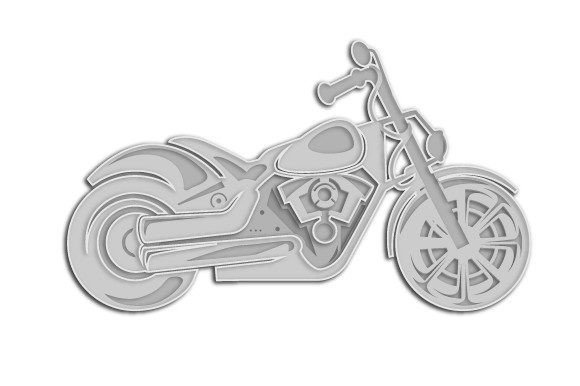
Motorbike Layered Intricate Cut: A Designer’s Review
As a professional embroidery designer and product reviewer, I approach every new digital asset with a healthy dose of skepticism. The market is flooded with files that look stunning on a screen but fail catastrophically under the needle. When I first opened the Motorbike Layered Intricate Cut, my immediate focus was not just on the aesthetic appeal, but on the structural integrity of the design for real-world application. This file is categorized as Home Décor and provided as a 3D SVG, which immediately suggests it was originally intended for paper crafting or laser cutting. However, for an embroidery professional, this format presents a unique opportunity and a specific set of challenges. My goal in this review is to determine if this intricate vector can be successfully translated into a high-quality machine embroidery design without losing its mechanical soul or causing production headaches.
First Impressions: Mechanical Precision Meets Digital Art
The visual personality of the Motorbike Layered Intricate Cut is undeniably bold. It captures the rugged, industrial essence of motorcycle culture through complex geometry rather than simple outlines. As a 3D SVG, the depth is created through overlapping shapes rather than shading, which actually translates surprisingly well to embroidery logic. When I evaluate a design for custom apparel or personalized gifts, I look for "stitchability." Does the shape flow? Are the details distinct enough to survive thread tension?
This design feels substantial. It does not rely on tiny, fragile elements that might get lost in fabric texture. Instead, it uses layered segments that mimic the assembly of actual bike parts. For an Etsy seller or small shop product creator, this is promising. It avoids the generic clip-art look that often devalues handmade products. The mood is masculine, technical, and precise, making it an excellent candidate for garage décor, biker gifts, or boutique branding targeting motorcycle enthusiasts. However, because it is an intricate cut file, the conversion process requires careful attention to ensure those layers become functional stitch regions rather than just stacked vectors.
Real-World Application: Stitching for the Biker Demographic
To truly test this asset, I mentally placed it in a recent client scenario: creating a series of premium embroidered patches and a custom tote bag design for a local motorcycle rally vendor. In this context, the Motorbike Layered Intricate Cut needs to perform as both a standalone graphic and a value-add merchandise item.
For the embroidered patch application, the layered nature of the SVG is a massive advantage. Patches require defined boundaries and dense coverage. The distinct segments of this motorbike design allow for color blocking that creates natural depth without excessive stitch density. I could envision using a heavy satin stitch for the outer contours to create a raised border, while utilizing fill stitches for the internal mechanical layers. This approach mimics the 3D effect of the original file while ensuring the patch remains durable and washable.
When considering sweatshirt embroidery or custom apparel, the design holds up well on heavier fabrics like fleece or denim. The intricacy demands a canvas that won't distort. On a heavyweight hoodie, the Motorbike Layered Intricate Cut would serve as a striking back print or a detailed chest logo. For home décor projects, such as a garage wall hanging or a decorative pillow cover, the design’s complexity becomes a focal point. Unlike simpler applique designs that can look flat, this layered structure provides the visual interest necessary for adult-oriented home goods. It elevates the perceived value of the finished product, moving it away from "crafty" and toward "professional merchandise."
Navigating Technical Limitations and Fabric Choices
Despite its strengths, this design requires caution. Because it originates as a 3D SVG for cutting, the lines are mathematically perfect but physically unforgiving. Embroidery is organic; thread pulls and fabric shifts. You cannot simply auto-digitize this and expect perfection.
Avoid Stretchy and Thin Fabrics: The intricate details and likely high stitch count associated with preserving these layers will cause puckering on jersey knits or lightweight cottons. If you attempt this on a baby onesie or a thin t-shirt, you risk distorting the garment entirely. Stick to stable substrates like canvas, twill, denim, or felt.
Watch the Hoop Size: Intricate cuts often have expansive footprints. Before committing to a project, verify your hoop size against the final digitized dimensions. Resizing a complex layered design down too much can cause the internal details to merge into a solid lump of thread. Conversely, scaling it up for a large tote bag design may require adding additional underlay or anchor points to prevent registration issues between the layers.
Dark Fabric Considerations: While the design is bold, intricate internal cuts can disappear on black fabric if the thread contrast isn't managed perfectly. If stitching on dark garments, consider using a lighter running stitch outline to define the separation between layers, or select metallic threads to enhance the mechanical aesthetic.
Impact on Brand Value and Customer Trust
For creative entrepreneurs and commercial embroidery businesses, consistency is currency. Using a design like the Motorbike Layered Intricate Cut signals to customers that you understand niche aesthetics. Generic bike silhouettes are everywhere; a layered, intricate interpretation suggests customization and effort. This directly influences buyer engagement and justifies higher price points for handmade products.
However, professionalism also means delivering durability. If the stitch density is too high because the layers weren't optimized during digitizing, the patch could become stiff and uncomfortable, or the towel could lose its absorbency. Testing is non-negotiable. Your reputation as an Etsy seller or apparel decorator hinges on the tactile quality of the finish, not just the digital preview. When executed correctly, this design enhances brand recognition by offering a unique visual asset that competitors using standard stock libraries simply cannot match.
Essential Notes for the Embroidery Professional
Before you load this file into your software or machine, please adhere to these practical guidelines derived from professional experience:
- Verify File Compatibility: The download includes SVG, PDF, EPS, PNG, and DXF formats. These are vector and image formats, not native embroidery files (like PES, DST, or JEF). You must have digitizing software to convert this 3D SVG into a machine embroidery design, or hire a professional digitizer to do so.
- Consult the Instructions: The included PDF contains specific assembly instructions for the craft version. Study this to understand the intended layer order, as this will guide your digitizing sequence for proper stitch overlap and registration.
- Test on Scrap Fabric First: Never run this design on a final product without a test stitch-out. Use the exact fabric and stabilizer combination you intend for the sellable item to check for pull compensation and layer alignment.
- Check Licensing Terms: Confirm whether your purchase allows for commercial use of the finished embroidered product versus selling the digital embroidery file itself. These rights are rarely interchangeable.
- Optimize Stitch Density: When converting from SVG to stitches, manually adjust density settings. Vector layers often overlap perfectly in digital space, but in embroidery, this creates bulletproof stiffness. Reduce density in overlap zones or use knockdown stitches.
- Create Printable Mockups: Use the included PNG to create realistic digital previews for your shop listings before you even stitch. This helps validate market interest and saves production time.
- Stabilizer Selection is Critical: Given the intricacy, use a high-quality cutaway stabilizer for apparel or heavy tear-away for patches. Do not rely on spray adhesive alone; hoop securely to maintain the precision of the mechanical details.
The Motorbike Layered Intricate Cut is a sophisticated asset for the maker who is willing to put in the technical work. It bridges the gap between digital artistry and tangible craftsmanship, offering a fresh take on a classic theme. By respecting the translation process from vector to thread, you can turn this intricate file into a standout product that resonates deeply with the biker community and showcases your dedication to quality embroidery.