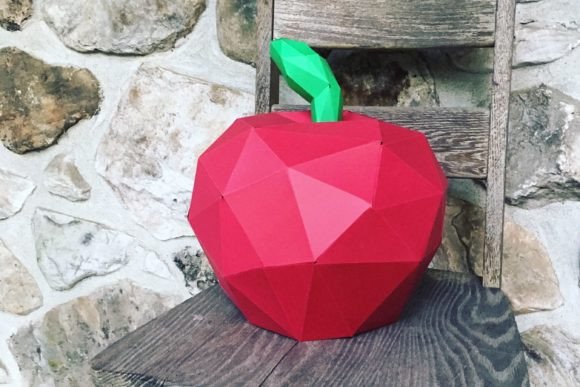
Apple Paper Sculpture: 3D SVG Objects Review
When evaluating a new graphic design asset for a client project, my first question is always about versatility. Does this file solve a specific visual problem, or is it merely decorative filler? Recently, while developing a seasonal campaign for an artisanal bakery and lifestyle brand, I tested the Apple Paper Sculpture to see if it could bridge the gap between digital marketing visuals and physical packaging. This quality template is created by Sofs Design, and it immediately stood out as more than just a flat illustration. The asset captures the tactile essence of papercrafts, translating a physical medium into a digital format that feels surprisingly authentic.
The initial impression is one of warmth and nostalgia. Unlike sterile vector art, this 3D SVG retains the subtle shadows and layered depth characteristic of real paper construction. For a handmade business or small business branding project, this texture is invaluable. It communicates "crafted" without requiring the client to hire a photographer for custom prop styling. The mood is distinctly organic and inviting, making it an ideal candidate for brands that want to emphasize natural ingredients, home comforts, or artisanal quality. However, as with any specialized design element, its success depends entirely on context and application.
Elevating Brand Identity and Packaging Concepts
In the context of our bakery rebrand, the Apple Paper Sculpture performed exceptionally well as a secondary brand element. While I would hesitate to use it as a primary logo mark due to its intricate details, it serves beautifully as a supporting icon for product labels and packaging design. We utilized the asset on kraft paper pouches and glass jar stickers, where the faux-3D effect added a premium feel to otherwise simple layouts. The sculpture’s dimensionality creates a natural focal point, guiding the customer’s eye toward key information like flavor profiles or seasonal availability.
For print-on-demand sellers and Etsy product creators, this asset offers significant value in mockup presentations. Placing the apple sculpture next to digital product previews helps ground the design in reality, increasing perceived value. In our testing, the asset worked best when given ample breathing room. It thrives in large layout areas such as hero graphics for websites, full-page editorial design spreads, or expansive social media graphics. When used as a decorative accent in these spacious environments, it enhances the visual hierarchy without competing with typography. The playful yet sophisticated nature of the object aligns perfectly with autumn campaigns, back-to-school themes, or health-conscious food branding.
Navigating Technical Constraints and Layout Challenges
Despite its charm, this graphic design asset requires careful handling. During the design phase, we discovered that the Apple Paper Sculpture loses its impact at small sizes. The layered paper effects that give it character become muddy when scaled down for business cards or tiny web icons. Designers must respect the complexity of the form; this is not a clipart element you can shrink to 50 pixels and expect to remain legible. Furthermore, it struggles against busy backgrounds. Because the asset relies on shadow and light to convey its 3D nature, placing it over a complex photograph or high-contrast pattern destroys the illusion of depth.
I also advise caution when integrating this into minimalist corporate materials or ultra-modern tech branding. The inherent whimsy of papercraft can clash with rigid grid systems or sterile aesthetic choices. It is a creative design element that demands a compatible visual language. If your client’s brand identity is built on sharp lines and flat colors, this organic, textured object may feel disjointed. Additionally, readability can suffer if the sculpture is placed too close to body text. The visual weight of the 3D form draws attention, so ensure it supports rather than distracts from your core message. Always prioritize clear communication over decoration.
Practical Pre-Flight Checks for Commercial Use
Before committing this digital product to a final deliverable, run through a rigorous technical assessment. As professionals, we cannot assume a file is ready for production simply because it looks good on screen. Here is the checklist I used when vetting this asset for our client:
- Monochrome Testing: Convert the 3D SVG to solid black and white. Does the shape still read clearly as an apple? If the definition relies entirely on color gradients, it may fail in single-color printing or embroidery applications.
- Contrast Verification: Test the asset on both pure white and deep charcoal backgrounds. Ensure the edges remain distinct and the internal shadows do not disappear into dark modes.
- Typography Pairing: Experiment with various font styles. We found that rounded sans-serif fonts and soft serifs complemented the paper texture best, while geometric display fonts created unnecessary tension.
- File Format Inspection: Verify that the SVG code is clean and editable. Can you adjust individual layers if needed? If using a PNG version, check that the transparency mask is crisp with no jagged edges.
- Print Proofing: Never skip a physical test print. Screen resolution often flatters textured assets. Print at actual size on your intended substrate to confirm the detail holds up in ink.
- Licensing Confirmation: Always review the commercial license terms. Confirm whether the asset can be used in client work, sold as part of a design bundle, or incorporated into merchandise for resale.
Strategic Applications Across Creative Platforms
Beyond traditional branding, the Apple Paper Sculpture shows remarkable adaptability across modern creative marketplaces. For Cricut users and crafters, the layered nature of the design translates logically to physical cutting machines, allowing digital buyers to recreate the look in actual cardstock. This dual utility makes it a strong contender for sublimation design and sticker design projects. Content creators can leverage the asset in Canva templates for Instagram stories or Pinterest pins, where the textured aesthetic stops the scroll more effectively than flat vectors.
In web design, the asset adds necessary warmth to e-commerce pages selling kitchenware or gourmet foods. It functions as a visual anchor that breaks up grids of product photography, adding rhythm to the user experience. For bloggers and publishers, it serves as an engaging header image or pull-quote accent that reinforces thematic content without requiring custom illustration commissions. The key is treating it as a versatile component of a larger system rather than a standalone novelty.
Final Assessment for Professional Designers
Ultimately, the Apple Paper Sculpture is a specialized tool that excels when matched with the right brief. It brings a unique, handcrafted energy to digital spaces that often feel cold and impersonal. For marketers and brand owners targeting audiences who value authenticity and tactile experiences, this asset delivers emotional resonance that standard stock imagery cannot match. However, professional judgment is required to avoid overuse or misapplication.
My verdict is positive for projects centered around food, lifestyle, education, and seasonal retail. The asset successfully bridges the divide between digital convenience and analog charm. By respecting its technical limitations and leveraging its textural strengths, designers can transform a simple paper sculpture into a powerful vehicle for brand storytelling. Just remember: let the asset breathe, verify your production specs, and always design with the end medium in mind. When used with intention, this 3D SVG proves that even in a digital-first world, the appeal of crafted objects remains undiminished.